NASCAR has confirmed penalties for two drivers belonging to the same team ahead of Sunday's race at Talladega Superspeedway.
NASCAR technical inspections take place each weekend at every track, both pre-race and post-race, ensuring all cars are legal and within the rules.
Teams are allowed to fail once, make adjustments, and try again without punishment, but if a team fails tech twice, they receive a mandatory penalty. The punishments get more severe as the failures rack up, but all teams must pass before they are allowed to compete.
Following inspection on Saturday, one team has fallen foul of the rules on both of their cars and will now pay a price for the remainder of the weekend.
NASCAR RESULTS: Live Cup Series Talladega coverage including stage winners and points
NASCAR confirms Talladega Cup Series penalties
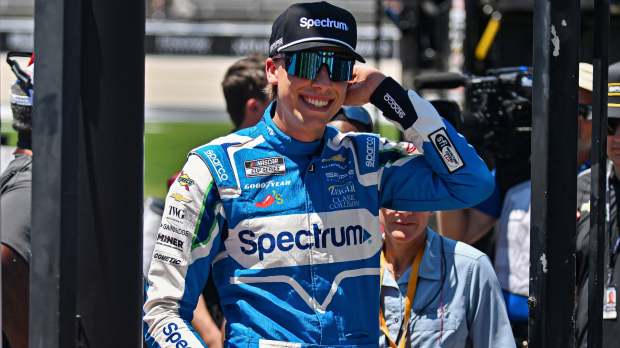
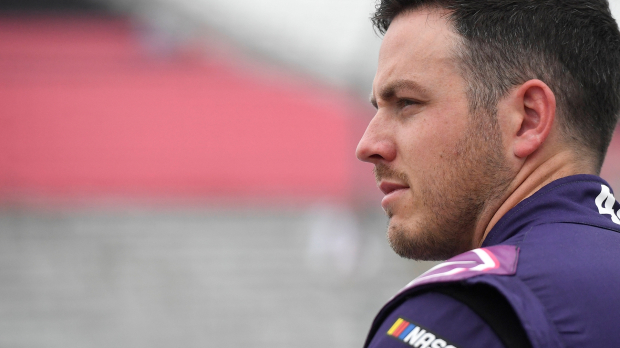
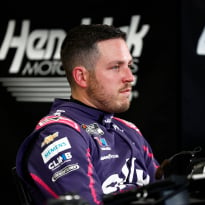
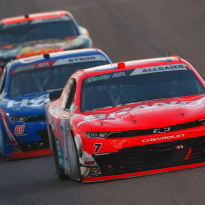
The two cars in question both belong to Kaulig Racing, with the Nos. 10 and 16 driven by Ty Dillon and AJ Allmendinger, having both failed technical inspection twice before passing.
As a result of this, both Dillon and Allmendinger and their crews have lost their pit stall selection for Sunday's race, while each has also had a crew member ejected from the event for the remainder of the weekend.
On the No. 10 team, this means that car chief Troy Lankford Jr. will no longer be involved at Talladega, while the same goes for the No. 16 car chief Jaron Antley.
Dillon and Allmendinger start Sunday's race in 35th and 28th position, respectively, after qualifying was canceled on Saturday.
What is NASCAR tech?
Every weekend, no matter the race, track, or event, NASCAR requires all Cup Series teams to pass inspection before hitting the circuit.
If a team fails tech on the first instance, it must fix the issue and repeat the process all over again until it passes.
If a car fails once, there is no punishment. However, if you fail twice or more, punishments are handed out, such as in the cases above.
According to NASCAR, the point of inspections is to level the sport's playing field as much as possible.
The website also outlines the five stations of a standard inspection, which are as follows:
Station 1: Car is elevated to visually inspect the nose, under the body and inside.
Stations 2-3: Body is visually inspected using a handheld template to ensure the body conforms to regulations.
Station 4: Optical scanning is used to inspect the chassis and body of car.
Station 5: Holding blocks are removed and final safety inspection is done.
READ MORE: Denny Hamlin issues honest reaction after shock NASCAR exit