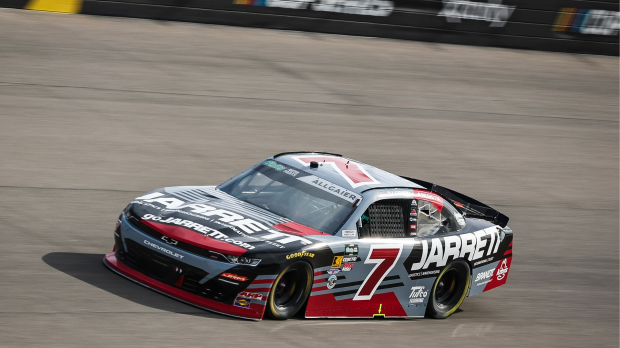
Anybody who has ever sat down to watch a NASCAR race will know just how crucial the different flags are in controlling proceedings. However, with 15 different flag combinations available to the officials, it can sometimes be hard to keep up with what each one means.
Of course, drivers are experts on this. Understanding the flags is crucial for safety, strategy, and fair competition. Each time a flag is flown, it provides instant communication to those in the car, such as signaling when to speed up, slow down, or address a problem with their machinery. Flags are also used to indicate penalties, whilst others can be used in relation to mechanical issues that must be resolved.
But why should fans care about any of this? Well, understanding these flags and what they each represent adds an extra layer of excitement and understanding when you are watching a race, allowing you to follow the different strategies and drama as it unfolds even more immersively.
So what do they all mean? Below, we’ve given you a comprehensive breakdown of each flag or combination used in NASCAR, and when it is likely to be flown.
The 15 different NASCAR flags
Green flag
Signals the start of a practice, qualifying or race session. It is also used to inform drivers when it is time to return to full speed racing after a caution.
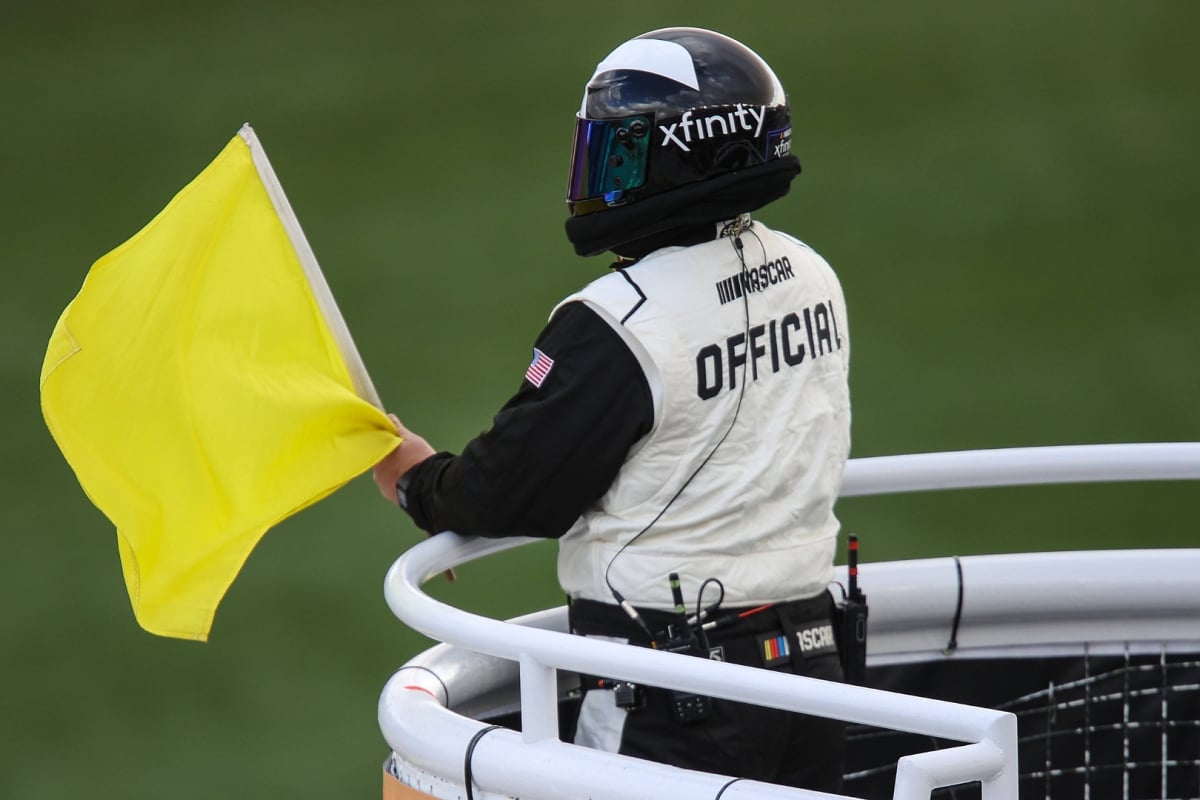
Yellow flag
Indicates a caution on the track due to a crash, debris, or other hazards. When it waves, drivers must slow down and follow the pace car while maintaining position behind it.
Red flag
The race has come to a halt. Cars must either stop where they are on the track, or head down pit road if extensive on-track repairs are needed, or if weather causes the racing to stop.
Black flag
Usually aimed at a driver who NASCAR officials deem has committed an on-track offence. Because of this, it can also be referred to as a ‘consultation flag’ as the driver and his team will meet with a NASCAR official in the pits to determine what the infraction was and if there will be a resulting penalty.
Also shown to a driver if they cannot maintain a consistent and competitive speed to continue racing, in which case, they must return to the garage immediately.
Black flag with white crossed lines
If a driver fails to follow the flagman’s instructions to immediately go to pit road within five laps, this flag is displayed to indicate the driver’s on-track progress is no longer being scored. The driver also tends to be disqualified at this point.
White flag
Indicates there is one lap remaining in the race. If a caution is thrown after the white flag, the field is frozen at the time of the caution and that is the final race result.
Black and white checkered flag
Indicates the end of a race. Also used to indicate the end of a driver’s qualifying effort.
Green and white checkered flag
Indicates the end of a stage during the race.
Blue flag with yellow diagonal stripe
Used to alert cars set to be lapped to either move over or be courteous when leaders or a pack of lead lap cars are approaching.
Blue flag
Only used on road courses. Warns drivers of hard-to-see problems ahead of them on the track, such as a wrecked car, if the race is still under green flag conditions.
Yellow and red striped flag
Only used on road courses. Indicates that there is debris on the track.
Red flag with yellow stripe
Stationed at the entrance to pit road. Indicates that the pits are closed.
Red and black flags together
Displayed simultaneously to indicate practice or qualifying session has concluded.
Two black and white checkered flags
Indicates the race has reached its halfway point.
Green white checkered flag sequence
Thrown if a caution occurs in the final two laps of a race. NASCAR will continue the race under yellow flag conditions in the hopes of eventually returning to and finishing the race under green flag conditions.
If the race does resume, it’s a two-lap shootout to the line in overtime.