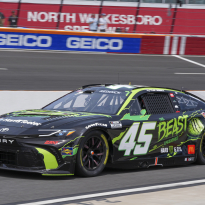
Though they may be overlooked compared to the sheer power of an engine or the sleek aerodynamic design of a car, four strong tires are just as important when it comes to high-speed NASCAR racing.
Built to withstand banked turns and blazing straightaways at punishing speeds, make no mistake that NASCAR tires are engineered as aggressively as the machines that they stick to the race track.
Ultimately, understanding how the tires work is the key to understanding the limits of the car, which, in turn, is key to understanding how to go fast, maintain those speeds, and win races.
With that said, here’s everything you need to know about the NASCAR tires set to be in use in 2026.
Who is NASCAR’s official tire supplier?
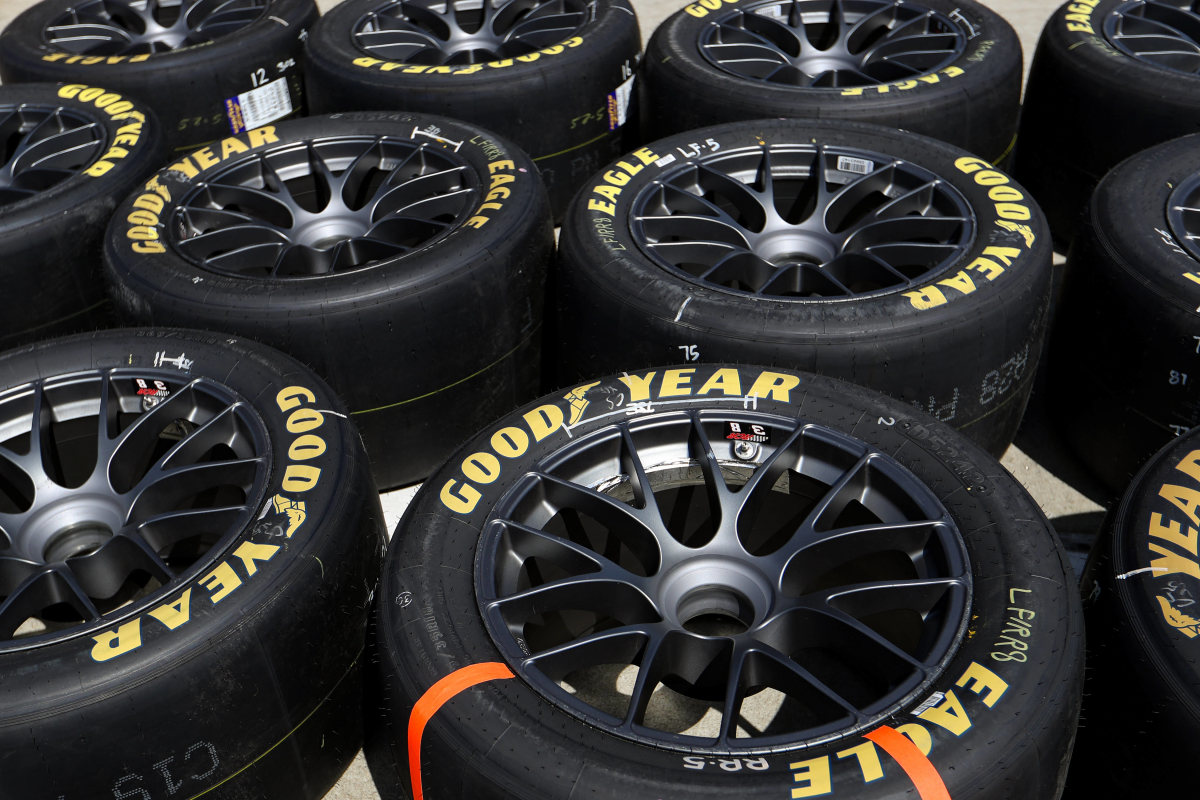
Heading into 2026, Goodyear remains the official tire supplier of NASCAR, as it has been since 1954. In fact, since 1999, Goodyear has been the sole tire supplier for the sport in the Cup, O’Reilly Auto Parts (formerly Xfinity) and Truck Series.
Astonishingly, Goodyear produces more than 100,000 tires for NASCAR’s three national series every year, with each one hand-built at their global headquarters in Akron, Ohio.
NASCAR and Goodyear last renewed their partnership in December 2022, agreeing to a new multi-year extension.
“Goodyear has been a trusted partner to the NASCAR industry since 1954, playing a critical role in our shared pursuit to deliver the best racing in the world,” said Steve Phelps at the time, who was then the President of NASCAR but is now the sport’s Commissioner.
“For more than 25 years, Goodyear Eagle tires have been the only component that connects the stock car to the racetrack. Our continued partnership will allow us to push boundaries and innovate our racing product for generations to come.”
What types of tires do NASCAR use in the Cup Series?
Dry Slick Radials (Primary Race Tire)
Asphalt, concrete ovals and road courses run a dry slick radial tire, also known as ‘slicks’ or a ‘primary’ tire.
There are four types of radial tires Goodyear produces - speedway, intermediate, road course and short track.
Since 2022, NASCAR Cup Series cars have used a new 18-inch Goodyear radial tire, specifically designed for the next-gen car. These radials are built with modern construction, stiffer sidewalls, and a wider contact patch to improve handling, durability, and response.
Speedway radials
Used at superspeedways such as Daytona and Talladega, speedway radials are the hardest compound of radial tire that there is, built to withstand long, sustained loads.
With the throttle often wide-open, superspeedways generate enormous stress on the tire, so the priority for Goodyear and NASCAR is safety, heat resistance, and stability, not necessarily ultimate cornering grip.
Intermediate radials
Intermediate radials are used at intermediate tracks such as Charlotte, Las Vegas and Kansas, with a medium-to-hard compound design that balances grip and wear.
These tires have a wider performance window than speedway tires and are optimized for controlled wear and predictable falloff over long green flag runs.
Road course radials
Road course radials are used on road courses such as COTA and Watkins Glen, with a reinforced construction built to withstand the curb strikes and heavy braking that come with road course racing.
Compared to ovals, road courses put the tires through a whole different type of stress, and therefore need a construction that can handle the high lateral load and rapid temperature changes throughout a lap and race.
Short track radials
As with all of these, the clue is once again in the name, with this compound used at short tracks such as Bristol and Martinsville.
These are the softest tires that Goodyear produces, designed for maximum grip at low speeds but also to have high falloff to encourage tire management and a variety of strategies. This was best highlighted in the Bristol night race in 2025, with some tires lasting as few as 25 laps.
Wet weather tires
Depending on the weather conditions, Goodyear provides a wet-weather tire that can be used at all road courses. The complete opposite of slicks, wet tires use deep circumferential and lateral grooves to help expel standing water, and are optimized for traction on drenched surfaces.
Additionally, Goodyear and NASCAR approved a wet-weather tire, sometimes called the damp or intermediate wet tire, for shorter ovals, including Phoenix Raceway, Martinsville Speedway, New Hampshire Motor Speedway, North Wilkesboro Speedway and Richmond Raceway.
This is a lightly treaded wet-weather radial designed for light rain, drizzle, or a damp and drying track.
Option tires
Option tires are softer, grippier tires introduced by NASCAR in 2024 as an alternative compound for teams to use in certain races in the aim of improving overtaking and giving teams more strategy options.
The idea is that they will provide teams with the opportunity of a short-term burst in speed, but that the teams will pay for it due to the increased tire falloff that they use.
These tires are essentially a gamble on pace vs durability, and therefore add drama and strategy to the races where they are used.