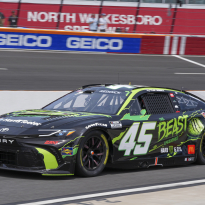
NASCAR has confirmed that three Cup Series drivers have been hit with penalties ahead of Sunday's race at North Wilkesboro Speedway.
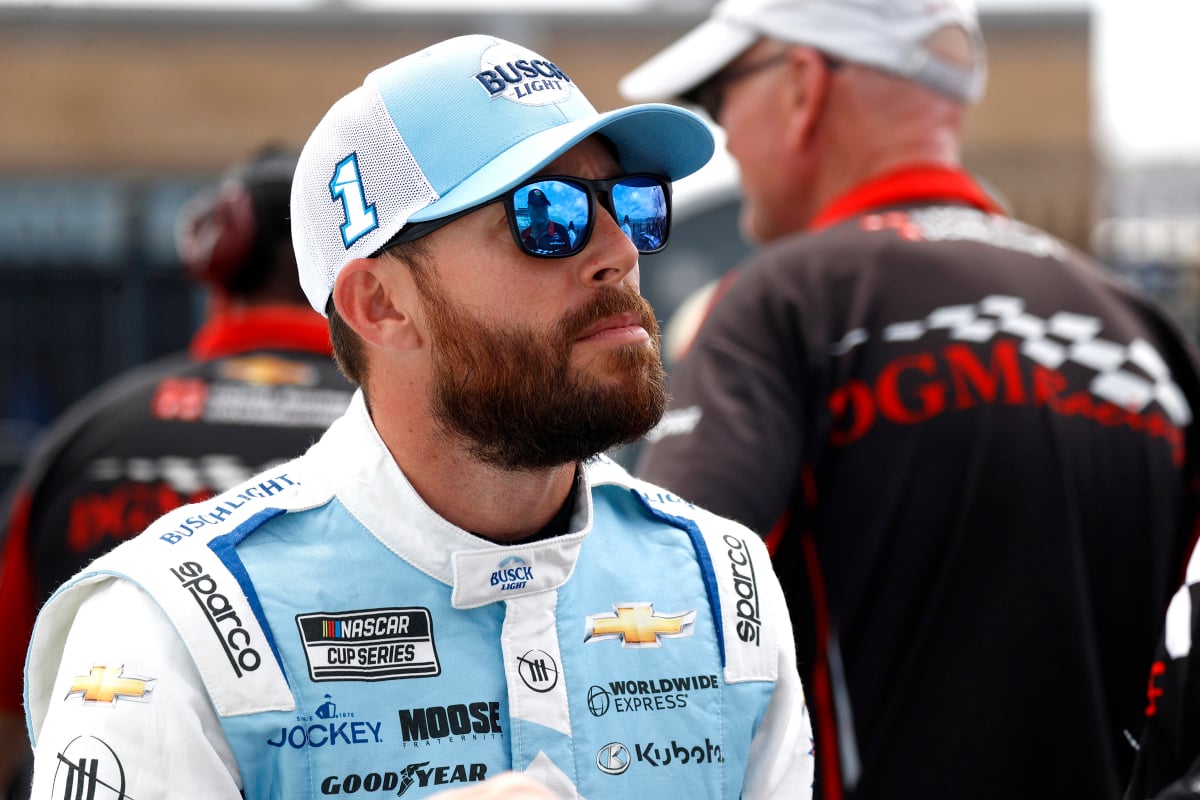
One of those drivers, Ross Chastain, and his No. 1 team at Trackhouse Racing have been hit with a host of penalties after failing technical inspection three times before passing.
As a result, their car chief, David Fero, has been ejected for the remainder of the event, and the team has also lost its pit stall selection for Sunday's race. On top of this, Chastain must also drop to the rear of the field before the start of the race and serve a pass-through penalty following the green flag.
Elsewhere, another Trackhouse car also failed inspection multiple times, with Connor Zilisch's No. 88 having failed twice, just as Austin Hill's No. 33 team did at Richard Childress Racing.
For their failures, the Nos. 88 and 33 teams have both had their car chiefs ejected for the remainder of the event and lost their pit stall selection for Sunday's race.
READ MORE: NASCAR Race Today: North Wilkesboro start times, schedule, TV channel and live stream
NASCAR confirms Darlington penalties
The three cars in question are Chase Elliott's No. 9 Hendrick Motorsports Chevrolet, Chris Buescher's No. 17 RFK Racing Ford, and the No. 66. Garage 66 entry driven by Timmy Hill.
All teams have now each had their car chief ejected for the remainder of this weekend's event, but that isn't the only punishment NASCAR has sent their way.
On top of that, all three of the above drivers have lost their pit stall selections for Sunday's race, which will affect them and their positioning every time they come down pit road.
What is NASCAR tech?
Every weekend, no matter the race, track, or event, NASCAR requires all Cup Series teams to pass inspection before hitting the circuit.
If a team fails tech on the first instance, it must fix the issue and repeat the process all over again until it passes.
If a car fails once, there is no punishment. However, if you fail twice or more, punishments are handed out.
According to NASCAR, the point of inspections is to level the sport's playing field as much as possible.
The website also outlines the five stations of a standard inspection, which are as follows:
Station 1: Car is elevated to visually inspect the nose, under the body and inside.
Stations 2-3: Body is visually inspected using a handheld template to ensure the body conforms to regulations.
Station 4: Optical scanning is used to inspect the chassis and body of car.
Station 5: Holding blocks are removed and final safety inspection is done.
NASCAR TODAY: Carson Hocevar humbled and 855-race driver comes out of retirement